
Trip Facts
Duration
19 Days
Trip Grade
Difficult
Country
Nepal
Maximum Altitude
5,416 m
Group Size
1–15
Starts
Besisahar
Ends
Nayapul
Activities
Trekking, Cultural Exploration
Best Time
Sept to Dec, Mar to May
Highlights
- Trek through one of the world’s most famous long-distance treks in Nepal.
- Cross the Thorong La Pass (5,416m), the highest point of the journey.
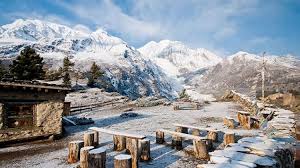
- Experience diverse landscapes: lush green valleys, alpine meadows, dry deserts, and snowy peaks.
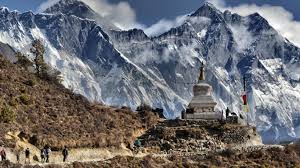
- Visit traditional Gurung, Thakali, and Tibetan-influenced villages.
- Explore holy sites like Muktinath Temple and natural wonders like hot springs in Tatopani.
- Spectacular views of Annapurna, Dhaulagiri, Manaslu, and Machhapuchhre (Fishtail).
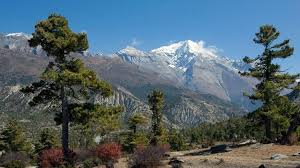
- Walk through apple orchards, pine forests, and rhododendron-filled trails.
- Discover the blend of Hindu and Buddhist culture along the route.
Overview
Annapurna circuit trek
Annapurna circuit trek is one of the most beautiful long distance trekking trails in the world. Opened to visitors since 1980, this is a classic trek in the Annapurna conservation area of Nepal. It is not as difficult as it used to be few decades ago but it is now feasible for average trekkers as well, and for thrill seekers there are deviations in this trekking region that take you to more adventurous trails. This treks starts from Besisahar (840m, seven hours ride from Kathmandu) to achieve the goal of summiting Thorung La pass at 5416m. Annapurna circuit trek starts in the Marshyangdi river valley and winds up in the Gorge of Kali Gandaki. The circuit goes through four districts, namely: Lamjung, Mustang, Manang and Myagdi.
Highlights of the Annapurna circuit trekking.
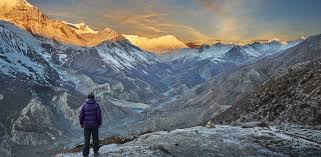
Passing through the most spectacular Himalayan views, this trek spellbinds you with close quarter portraits of the Annapurna I-IV or the Annapurna Massif and other mountains like Dhaulagiri (8,167m), Manaslu (8,156m), Gangapurna ( 7,455m)(mountain and glacier), Machhapuchhre(6,993m). You get views of numerous other 6000m to 8000m peaks in Annapurna range. Not only that, the lake situated at highest altitude; Tilicho Lake (4,919m) also falls in the Annapurna region. Also, you have to cross two separate river valleys encircling the Annapurna massif and cross through Thorung La (5416m); it is the highest pass in this trek. From subtropical forests, paddy fields, massive cliffs, gigantic waterfall along the way to picturesque traditional villages, this trek astounds you. The influence of Tibetan culture and racial diversity as there are Hindu and Buddhist villages along the way are quite a watch. To make passing through Thorung La safer and easier all hikers trek this route counter clockwise so the daily increase in altitude is slower. There is only so much one can say about this trek, it is once in a lifetime opportunity and if you love Mountains you should t do this trek at least once in your lifetime. Annapurna circuit trek trails are trail runners’ dream come true.
Best season:
Mid September to December in autumn or Fall (for American folks) and March to mid May in spring are the best times to trek Annapurna Circuit. However, some people like to trek during winter and Monsoon as well, traffic is low during these seasons and thus the pleasure of solitude in mighty Himalaya.
Itinerary
When you land in Kathmandu, our team will greet you at the airport and take you to your hotel. You can rest after your flight and later enjoy a traditional Nepali dinner with your guide. This is also a good chance to ask questions about the trek and prepare for the days ahead. Overnight in Kathmandu.
Max. Altitude
1,350m
Today is about culture and preparation. You’ll visit important heritage sites such as Pashupatinath Temple, the Buddhist stupa of Boudhanath, and the ancient monkey temple Swayambhunath. These visits help you connect with Nepal’s rich traditions. In the afternoon, you’ll meet your guide, check your trekking gear, and get final tips before the journey begins. Overnight in Kathmandu
We start the adventure with a long but scenic drive following the Trishuli and Marshyangdi Rivers. On the way, you’ll see terraced fields, small villages, and beautiful hillsides. Besisahar is the gateway to the Annapurna region, buzzing with trekkers and locals. Overnight in a lodge. Dinner included.
Max. Altitude
800m
A jeep ride along rough mountain roads takes us through waterfalls and pine forests. As you gain altitude, the air feels cooler and fresher. Chame is a lively town and the headquarters of the Manang district, with fantastic views of Lamjung Himal. Overnight in a lodge. Dinner included.
We start walking today! The trail follows through apple orchards, pine forests, and suspension bridges over roaring rivers. You’ll enjoy views of Annapurna II and Pisang Peak before reaching Pisang village. The houses here are built in Tibetan style, giving you the first taste of Himalayan culture. Overnight in a lodge. Dinner included.
There are two routes: the lower valley path or the higher scenic trail via Ghyaru and Ngawal. The high route gives stunning views of Annapurna II, III, and Tilicho Peak. By afternoon, we reach Manang, a cultural hub of Tibetan-style villages with friendly teahouses. Overnight in a lodge. Dinner included.
To avoid altitude sickness, we spend the day in Manang. Short hikes are recommended: you can visit Gangapurna Lake or hike to a small monastery. The rest of the day is free for exploring local bakeries, shops, or talking with villagers. Overnight in a lodge. Dinner included.
We leave Manang and climb gradually, passing alpine meadows where yaks graze. The air is thinner now, and you’ll feel the altitude. Yak Kharka is a small settlement with only a few lodges, surrounded by incredible mountain views. Overnight in a lodge. Dinner included.
The trail becomes rocky and steeper as we head to Thorong Phedi, the base before the pass. It’s important to move slowly here, as the air is thin. Many trekkers rest early to prepare for the long day ahead. Overnight in a lodge. Dinner included.
This is the toughest but most rewarding day of the trek. We start early, climbing slowly toward the top of Thorong La Pass. Prayer flags flutter in the wind, and the view of the Annapurna and Dhaulagiri ranges is unforgettable. After celebrating at the pass, we descend to Muktinath, an important pilgrimage site for Hindus and Buddhists. Overnight in a lodge. Dinner included.
From Muktinath, the trail passes through the windy Kali Gandaki Valley. We stop at Jomsom before continuing to Marpha, famous for its apple orchards and local apple brandy. The stone-paved streets here are neat and charming. Overnight in a lodge. Dinner included.
We leave the dry landscapes behind and return to greener scenery with pine forests and waterfalls. Ghasa is a peaceful village in the lower valley, known for its warm hospitality. Overnight in a lodge. Dinner included.
A comfortable downhill walk brings us to Tatopani, which means “hot water.” After many days of trekking, you’ll love relaxing in the natural hot springs. Overnight in a lodge. Dinner included.
The trail climbs back into the hills through terraced fields and rhododendron forests. Ghorepani is a lively village, popular with trekkers heading to Poon Hill. Overnight in a lodge. Dinner included.
We rise early and hike to Poon Hill for one of the best sunrise views in Nepal. The golden glow over Annapurna and Dhaulagiri is magical. After breakfast, we trek through rhododendron forests to Tadapani. Overnight in a lodge. Dinner included.
Today’s trek is shorter. We descend through forests to reach Ghandruk, a beautiful Gurung village with traditional stone houses and great views of Machhapuchhre (Fishtail). Overnight in a lodge. Dinner included.
We trek down to Nayapul, passing farmlands and rivers. From there, a short drive takes us to Pokhara, where you can relax by Phewa Lake and enjoy the city’s peaceful atmosphere. Overnight in Pokhara. Dinner included.
We return to Kathmandu by tourist bus or private car. Once in the city, you can shop for souvenirs or simply rest. Overnight in Kathmandu. Dinner included.
Our team will drop you at the airport in time for your flight home. You leave Nepal with memories of a lifetime and a sense of achievement from completing the Annapurna Circuit Trek.
Useful Information
Best Season to Trek:
Spring (March–May) and autumn (September–November) are the most popular seasons. You’ll have clear skies, stable weather, and colorful landscapes. Winter is colder but quieter, while summer brings monsoon rains.
Difficulty Level:
The Annapurna Circuit Trek is considered moderate to challenging. You don’t need to be an expert trekker, but good fitness and stamina are important. Daily walks range from 5 to 8 hours.
Altitude and Acclimatization:
The highest point is Thorong La Pass (5,416m). Acclimatization days in Manang and a steady pace help reduce the risk of altitude sickness. Drink lots of water, avoid alcohol, and walk slowly.
Accommodation:
Teahouses provide simple but cozy rooms with beds and blankets. Toilets may be shared. In big villages like Manang, you can even find bakeries and Wi-Fi.
Food on the Trek:
Dal Bhat (rice, lentils, and vegetables) is the most common meal, and it gives lots of energy. You’ll also find noodles, soups, potatoes, bread, and sometimes pasta or pizza.
Drinking Water:
Bottled water is available, but it’s better to use water purification tablets or a reusable bottle to reduce plastic waste.
Electricity and Wi-Fi:
Most villages have electricity and Wi-Fi, though at higher altitudes, the connection may be weak and charging electronics can cost extra.
Packing List:
Bring warm clothing (down jacket, thermal layers), trekking boots, trekking poles, sleeping bag, gloves, sun hat, sunglasses, sunscreen, and a headlamp. A small first aid kit is highly recommended.
Cultural Respect:
The trek passes through Hindu and Buddhist villages. Dress modestly, greet locals with “Namaste,” and always ask before taking photos.
Permits Required:
You’ll need the Annapurna Conservation Area Permit (ACAP) and the TIMS card (Trekkers’ Information Management System). These are included in our package.
Safety:
Our guides are trained in mountain first aid and carry necessary supplies. Horses are available in some sections if someone is unable to walk. Travel insurance that covers high-altitude trekking is mandatory.
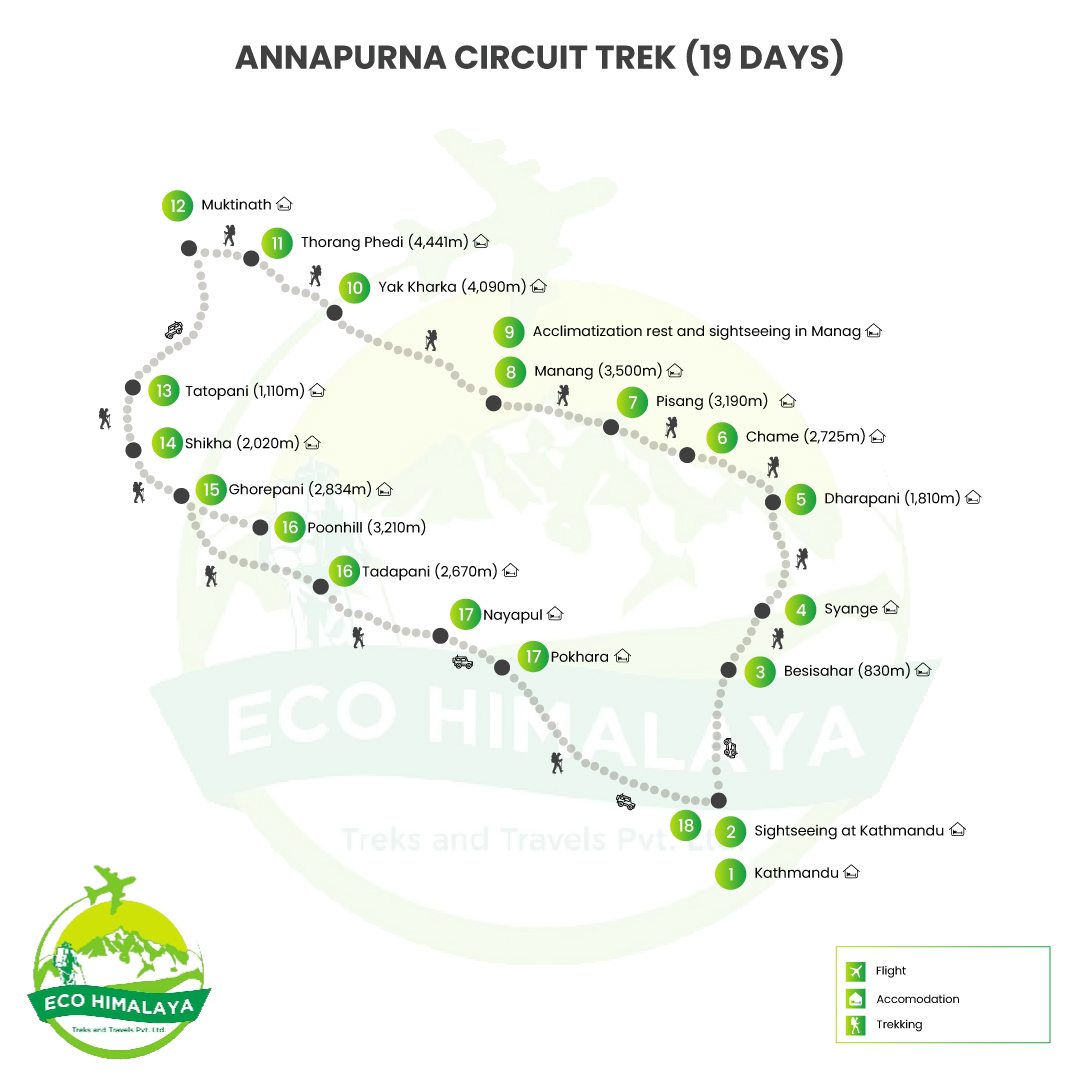
Official Annapurna circuit trek (19 days) Map
FAQs
The classic route takes 19 days, which includes acclimatization and rest days.
Not necessarily, but you should be physically fit and comfortable walking for 5–7 hours daily.
The Thorong La Pass at 5,416m is the highest point.
Yes, but we include rest days for acclimatization and guides are trained to handle it.
You’ll find Dal Bhat (rice and lentils), noodles, soups, bread, potatoes, and sometimes pasta or pizza.
Spring and autumn are the best seasons for stable weather and clear mountain views.
Yes, in most villages, but it may be slow or unreliable in higher areas.
Both are difficult, but the Annapurna Circuit has a wider range of cultures and scenery.
It's mandatory and should cover things like hiking at high altitudes and getting out of a dangerous situation.