
Trip Facts
Duration
20
Trip Grade
Difficult
Country
Nepal
Maximum Altitude
5,545 m (Kalapathar)
Group Size
1–12
Starts
Kathmandu (Flight to Lukla)
Ends
Lukla (Flight to Kathmandu)
Activities
Trekking, High-Altitude Pass Crossing, Sightseeing, Cultural Exploration
Best Time
March to May and September to November
Highlights
- Cross the three legendary passes of Everest: Kongma La (5,535m), Cho La (5,420m), and Renjo La (5,360m).
- Visit both Everest Base Camp (5,364m) and Kalapathar (5,545m) for breathtaking views of Mount Everest.
- Explore the sparkling turquoise lakes of Gokyo Valley and climb Gokyo Ri (5,357m).
- Stay in Sherpa villages like Namche Bazaar, Dingboche, and Thame to experience local life and culture.
- Discover ancient Buddhist monasteries and prayer flags fluttering against snowy peaks.
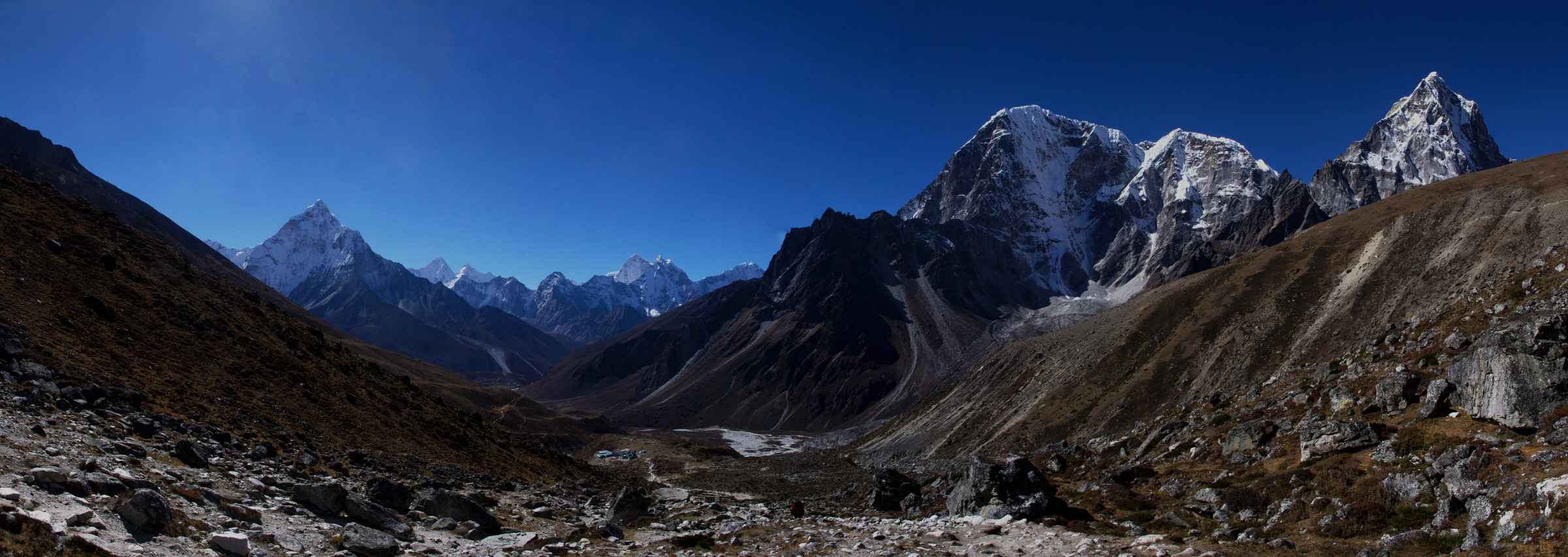
- Stunning 360° views of Everest, Lhotse, Makalu, Cho Oyu, Ama Dablam, Pumori, and many more.
- A real adventure combining remote trails, high mountain passes, and cultural treasures of the Everest region.
Overview
The Everest High Passes Trek is one of the most complete trekking adventures in the Khumbu region. Over 20 days, you’ll walk through lush valleys, climb high ridges, cross three iconic Himalayan passes, and stand face-to-face with the world’s tallest mountains. Unlike the regular Everest Base Camp Trek, this route is designed for trekkers who want to experience everything the Everest region has to offer—base camp, Gokyo Lakes, hidden valleys, and panoramic viewpoints.
The journey begins with a scenic flight to Lukla and gradually takes you deeper into the Sherpa homeland. You’ll spend time acclimatizing in Namche Bazaar, explore Tengboche Monastery, and continue towards the first major challenge—Kongma La Pass. Later, you’ll trek to Everest Base Camp and Kalapathar, before crossing Cho La Pass into the spectacular Gokyo Valley. The turquoise lakes here are simply magical, and climbing Gokyo Ri gives you one of the best mountain views in Nepal. Finally, you’ll head over the Renjo La Pass, a quieter and less-crowded trail with equally dramatic scenery, before returning to Lukla.
This trek is challenging but rewarding. It requires good fitness, proper acclimatization, and a spirit for adventure. Along the way, you’ll enjoy cozy teahouses, warm Sherpa hospitality, and delicious Nepali meals. If you are someone who wants a complete Everest experience in a single trek, the Everest High Passes Trek is perfect for you.
Itinerary
When you arrive in Kathmandu, our representative will meet you at the airport and transfer you to your hotel. The rest of the day is free for you to rest after your flight or take a short walk around the lively streets of Thamel, known for its trekking shops, cafés, and colorful atmosphere. In the evening, we gather for a welcome dinner where you will meet your trekking guide and get a short briefing about the adventure ahead.
Today is the day to learn about Kathmandu's history and culture and get ready for the walk. We see some of the valley's most famous sights in the morning. These include the holy Hindu temple of Pashupatinath, the huge Buddhist stupa of Boudhanath, and the high Swayambhunath, which is also known as the Monkey Temple. You can get a feel for Nepal's spiritual life at these places. Later in the day, your guide will check your trekking gear, suggest any last-minute purchases, and answer your questions about the trek. This is also a good time to adjust your body clock before heading to the mountains.
After an early breakfast, we take a scenic 30-minute flight to Lukla, where the Himalayan adventure truly begins. The view from the plane is breathtaking as you fly above green hills and snowcapped peaks. From Lukla, the trail is easy and descends gradually through charming villages and forests of pine and rhododendron. Prayer stones and fluttering flags line the path as we follow the Dudh Koshi River towards Phakding. Overnight at a cozy teahouse with dinner.
We continue along the river, crossing several suspension bridges, including the famous Hillary Bridge decorated with colorful prayer flags. The trail is dotted with villages and mani walls (Buddhist stone carvings), and if the weather is clear, we may catch our first glimpse of Mount Everest. The final stretch is a steep climb that takes us into Namche Bazaar, the bustling Sherpa capital and trading town. Here, you’ll find shops, bakeries, internet cafés, and mountain gear stores. Overnight in Namche.
To adapt to the increasing altitude, we spend the day in Namche. A short hike up to Everest View Hotel rewards us with spectacular views of Everest, Ama Dablam, Lhotse, and other peaks. Another option is to explore Khumjung village, where you can visit a monastery that displays a legendary “Yeti Skull.” In the afternoon, you can relax, shop, or explore the vibrant Namche market. Overnight in Namche with dinner.
The trail to Tengboche is one of the most beautiful parts of the trek, with views of Everest, Lhotse, and Ama Dablam keeping us company. We walk through forests of pine and rhododendron, especially colorful in spring. After crossing the Dudh Koshi River, we climb steadily to reach Tengboche. The highlight here is the Tengboche Monastery, the largest in the Khumbu, where evening prayers create a peaceful atmosphere. The sunset view over Ama Dablam from here is simply unforgettable.
We descend through a forest to Debuche and cross the Imja Khola River before gradually climbing up through villages like Pangboche, known for its ancient monastery. As we move higher, the scenery changes to open fields with fewer trees and wider mountain views. Dingboche is a beautiful village surrounded by stone walls that protect the potato fields from the cold wind. Overnight at a teahouse.
Another acclimatization day helps our body adjust before we climb higher. A popular hike is to Nagarjun Hill, a steep but rewarding climb that offers panoramic views of Makalu, Lhotse, Island Peak, and Ama Dablam. You can also take a gentle walk around the village to see how Sherpa families live in these high-altitude settlements. Rest in the afternoon and enjoy warm meals in your teahouse.
Today’s walk is shorter but important for acclimatization. We head up the Imja Valley, passing stone huts and fields, until we reach Chhukung, the last settlement before the Kongma La Pass. From here, you can see Island Peak and glaciers in the distance. Overnight in a teahouse.
This is a challenging day as we cross the highest pass of the trek—Kongma La. The climb is steep and rocky, but from the top, the view of Everest, Makalu, and Lhotse makes the effort worthwhile. The descent is equally demanding, leading us down to the small village of Lobuche. After a long day, we rest and refuel with a hot dinner.
We trek along the Khumbu Glacier to Gorakshep, the last teahouse settlement before Everest Base Camp. After a short rest, we continue towards the base camp, walking on rocky and icy terrain. Finally, we reach the world-famous Everest Base Camp, where climbers set up their tents during expedition season. Standing at the foot of the highest mountain in the world is a special moment to remember. Overnight in Gorakshep.
We wake up early for a steep hike to Kalapathar, the best viewpoint for sunrise over Mount Everest. The view of the golden peaks glowing in the morning light is breathtaking. After enjoying the scenery, we descend back to Gorakshep for breakfast and then trek to Dzongla, a small settlement near Cho La Pass. Overnight in Dzongla.
Another tough but rewarding day as we cross Cho La Pass. The climb is steep, often with icy patches that require careful steps. At the top, the views of the surrounding peaks and glaciers are magnificent. The descent takes us to Thangnak, where we rest for the night.
Today’s trek is short but exciting as we reach the beautiful Gokyo Valley, home to a series of turquoise lakes. The reflections of snowcapped mountains on the water make this place truly magical. Overnight at a lakeside teahouse.
We start the morning with a climb to Gokyo Ri, one of the best viewpoints in Nepal. From the top, you’ll see Everest, Cho Oyu, Lhotse, and Makalu, as well as the sparkling Gokyo Lakes below. Later, we spend time exploring more of the lakes and the village. Overnight in Gokyo.
We cross the final high pass of the trek—Renjo La. The climb is steady but rewarding, with sweeping views of Everest, Rolwaling, and Gokyo Lakes. Descending into the quiet valley of Lungden feels peaceful after the busy trails. Overnight in Lungden.
The trek today follows an ancient trade route once used by Tibetan traders. We pass small settlements and reach Thame, a traditional Sherpa village famous for its monastery and mountaineering legends. Overnight in Thame.
We walk through forests and river valleys, gradually descending back into the lively town of Namche Bazaar. After days in remote areas, Namche feels lively, with bakeries, internet cafés, and shops. It’s a great place to relax before the final leg of the trek. Overnight in Namche.
Our final trekking day takes us back through familiar villages, forests, and suspension bridges until we reach Lukla. In the evening, we celebrate the successful completion of the Everest High Passes Trek with our guide and porters. Overnight in Lukla.
We take an early morning flight back to Kathmandu, enjoying one last view of the Himalayas from the air. After checking in at your hotel, you’ll have free time for shopping or sightseeing. In the evening, we host a farewell dinner with cultural music and dance to celebrate your incredible journey. Overnight in Kathmandu.
Cost Details
Included
- Airport transfers in Kathmandu
- Domestic flights (Kathmandu–Lukla–Kathmandu)
- Licensed trekking guide and porter service
- All meals during trek (breakfast, lunch, dinner)
- Teahouse accommodation during trek
- Hotel in Kathmandu (3 nights with breakfast)
- Everest region trekking permits (Sagarmatha National Park & TIMS)
- First aid kit and government taxes
Excluded
- International flights to/from Nepal
- Nepal entry visa fees
- Personal trekking gear and equipment
- Travel insurance (mandatory)
- Extra nights in Kathmandu due to flight delays
- Hot showers, Wi-Fi, battery charging in lodges
- Tips for guide and porter
- Personal expenses (drinks, snacks, souvenirs)
Useful Information
The Everest High Passes Trek is considered one of the most challenging yet rewarding adventures in Nepal. It combines the classic Everest Base Camp route with three high-altitude passes—Kongma La, Cho La, and Renjo La. Because of its demanding nature, trekkers need to be in good physical condition and prepared for long walking days of 6–8 hours, often on steep or rocky trails. Prior trekking experience is not mandatory, but training with cardio, hiking, and strength exercises for at least 2–3 months before the trek is highly recommended.
The best time to do the Everest High Passes Trek is during the spring season (March to May) and autumn season (September to November). During these months, the skies are usually clear, the weather is stable, and the trails are at their most beautiful. Winter and summer (monsoon) are not ideal because heavy snow can block the passes, and rain clouds can obscure the mountain views.
Since the trek crosses altitudes above 5,000 meters multiple times, acclimatization is very important. Our carefully designed itinerary includes acclimatization days in Namche Bazaar, Dingboche, and Gokyo to give your body time to adjust. Even with this, it is important to walk slowly, drink plenty of water, and follow your guide’s advice to avoid altitude sickness.
Traditional teahouses, which are family-run lodges along the trail, are where you’ll stay during the trip. Each room has two single beds, blankets, and sometimes a bathroom that is shared with another room. There is often a stove in the dining rooms to keep them warm and cozy. Nepalese favorites like dal bhat (rice and lentils) are served, along with noodles, soups, pancakes, and meals from around the world. While food is basic, it is freshly prepared and filling for trekkers. Hot showers, Wi-Fi, and battery charging are available in many villages but usually for an extra cost.
Electricity is limited and often comes from solar panels or small hydropower systems, so carrying a power bank is highly useful. Wi-Fi is available in many teahouses, but the connection may be slow and weather-dependent. Drinking water is available everywhere but should be purified with tablets or a filter before drinking.
For safety, Eco Himalaya provides licensed guides and porters who are trained in high-altitude first aid. We carry a first aid kit, monitor your health daily, and are prepared to arrange helicopter evacuation in case of emergencies. Travel insurance that covers high-altitude trekking is mandatory for all participants.
Culturally, the trek takes you through Sherpa villages where traditions are deeply tied to Tibetan Buddhism. Along the way, you’ll see monasteries, mani stones, and prayer wheels. Trekkers are encouraged to show respect by walking clockwise around religious monuments, spinning prayer wheels gently, and asking permission before taking photos of people.
The required permits for the Everest High Passes Trek include the Sagarmatha National Park entry permit and the Khumbu Pasang Lhamu Rural Municipality entry permit. These are all arranged by Eco Himalaya and included in the trip cost. With the support of experienced guides, comfortable teahouses, and a carefully planned itinerary, this trek offers one of the most complete Himalayan adventures available in Nepal